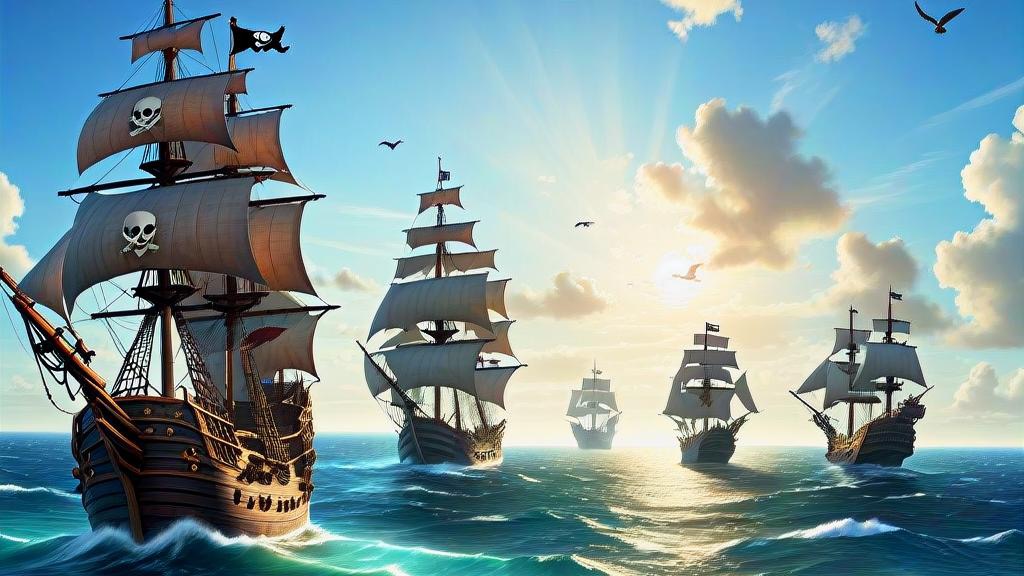
King of the Pirates is not a game about a chosen captain. It is a game about a sea full of people who all think they are the main character. That distinction shapes every system we build.
A single-player pirate game can make the world revolve around you. An MMO cannot. The harbour you saved last night may belong to someone else by morning. The route you marked as safe may be a war zone by the weekend. The story is not authored once. It is authored continuously by the players who show up.
The map is the story
We treat the world map as a shared document. Bases change hands. Fleets move. Alliances leave marks on the coastline. The job of the design team is not to write every outcome. It is to make the consequences readable, so players can tell what happened and why.
That means clarity matters more than volume. A raid should be legible from the horizon. A trade route should feel different when it is contested. A new player should be able to look at the map and understand where they might belong.
The sea belongs to whoever shows up.
Building for the second hour
The first hour of a strategy game is usually the most polished. The second hour is where retention lives. We spend most of our time on the loop after the tutorial: what you do when the obvious upgrades are done, who you talk to when your alliance goes quiet, and why logging off should feel like a decision rather than a relief.
Base building, fleet growth, and territory control only matter if they create reasons to interact. A stronger wall is not interesting on its own. A stronger wall that makes a neighbour ask for help is.
What we are testing next
- Can a new player find a meaningful role in a world that already has history?
- Do alliances create stories, or just spreadsheets?
- Does the sea still feel dangerous when you are winning?
King of the Pirates is still in development. We are not announcing a release date. The community is open now. When the next playtest opens, it will be shaped by the questions above.